Clinician search
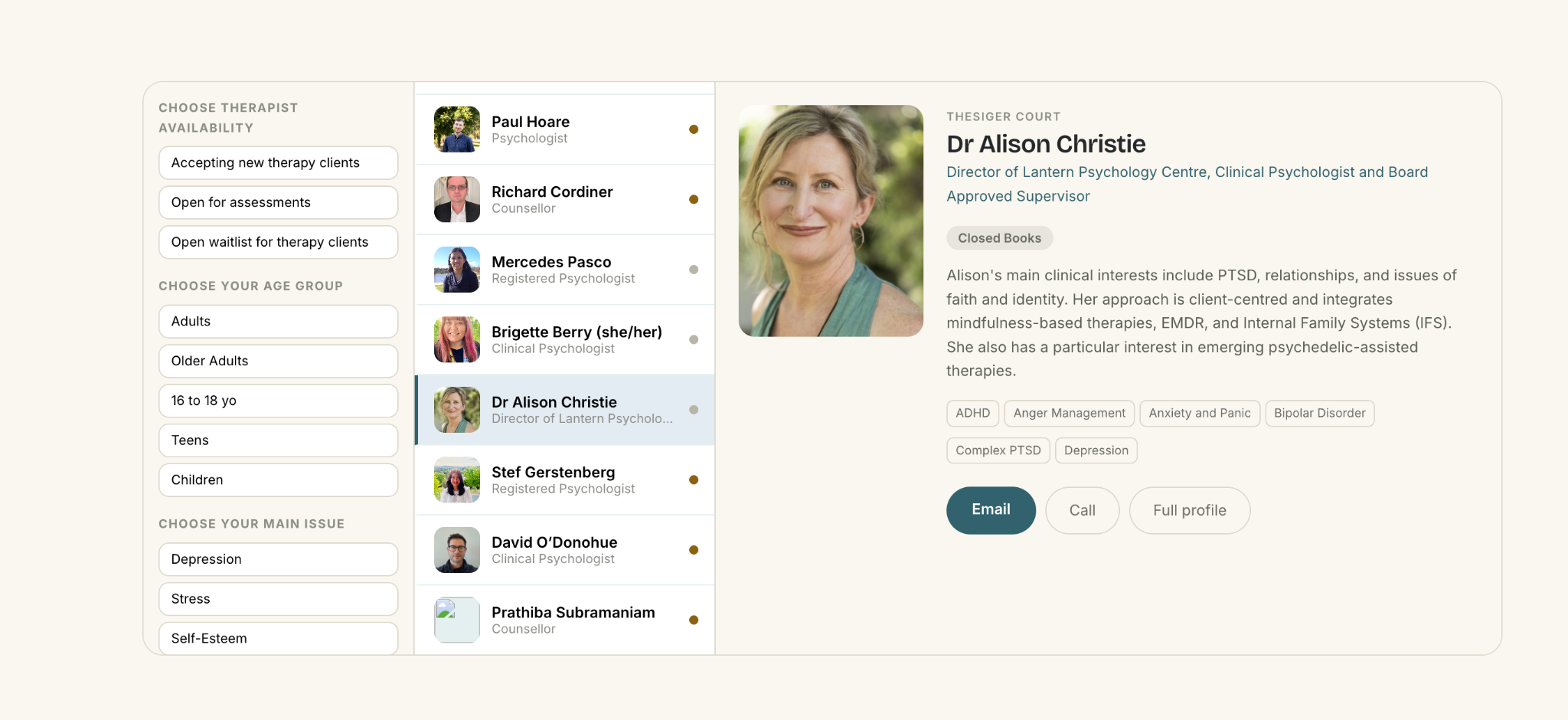
Eight filter categories across availability, age group, issue, gender, language, practitioner type, referral type and therapy approach.

Case study · Lantern Psychology Centre
A new site for a Canberra psychology group practice, built around one operational problem: clinician information changes constantly, and the people closest to that information should be able to update it without waiting on a developer.

The problem
Lantern is not one practice with one diary. It is a group of independent clinicians sharing premises, referrals and a front door.
On the old site, clinician information was static. If somebody closed their books, changed fees or updated contact details, the correction had to pass through the practice manager and then whoever maintained the website.
For a psychology practice, stale availability is not just inconvenient. It can send a person in distress to a clinician who cannot actually see them.
What was built
The public experience became easier for patients, while the internal system reduced the number of routine website updates that need to become developer jobs.
Eight filter categories across availability, age group, issue, gender, language, practitioner type, referral type and therapy approach.
A guided path for visitors who do not know which filters or clinician type they should be looking for.
Each clinician gets a private link to update their own bio, availability, fees and contact details without a login or developer.
The practice manager can see status across all clinicians, add people, edit on their behalf and copy private profile links.
The 14-field referral form still feeds the same spreadsheet, automation and Slack workflow the practice already used.
Room-rental rates and other operational information can be updated from a familiar spreadsheet rather than through a CMS.
The important decision
The people maintaining this information are clinicians and practice staff. A traditional CMS would add accounts, training and support overhead. The data is genuinely tabular, and a spreadsheet is already a tool they know.
The engineering work went into turning that familiar tool into a fast public-facing system, complete with filtering, profile updates and practice-level visibility.
Rebrand + homepage
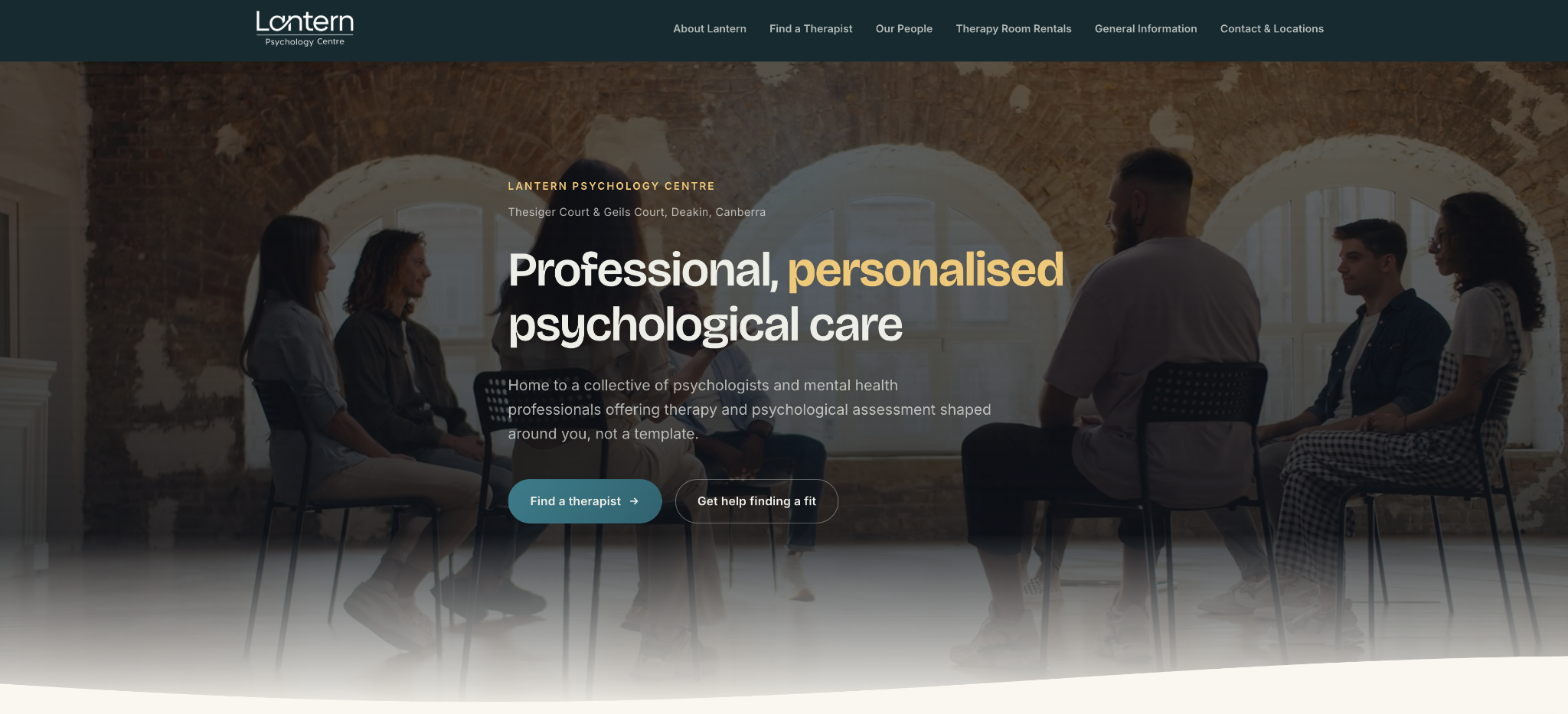
The project was not just functional. The site also gave Lantern a clearer visual identity and a calmer, more modern homepage experience that better reflected the quality of the practice.
The operational system and the public-facing brand were rebuilt together.

The outcome
The site is designed so the practice can keep critical information current while giving visitors a clearer way to find the right clinician.